Other PicoMicroYacht

Friday, 1 October 2021

Completing the Jurassic Coast - The Triassic


This summer I was able to finish my voyage along the Jurassic Coast, from Swanage to Exmouth.

I  had left the western end of the Jurassic coast is called the Triassic Coast, situated in East Devon. It is the oldest part of Jurassic coast, formed in the Triassic Period, just over two million years ago. It cameafter the Great Dying in which it is estimated that 90% of our planetary species were wiped out, preceeding the main age of the dinosaurs. 

Triassic early dinosaurs - artwork by Highlights For Children / Oxford Scientific/ Jupiter Image

I had the privilege of voyaging this coastland, part of a world heritage site on par with  the Great Barrier Reef or the Grand Canyon. This post describes the first of four trips along the coastland.


I started from Lyme Regis.The leaden sky yielded subtle greens and blues in the background, the calm weather enabling PicoMicroyacht to be left outside the harbour on the pontoons.


I  then voyaged to Axmouth Por, rowing along a wild looking coast. The wildness is caused by frequent land slippages in which layers of greensand and chalk slide into the sea over a further layer of water impervious clay. The land become almost impassible as wild flora form an almost impenetrable rain forest type enviroment.


The ever dangerous coastline is littered with wrecks, some beached.

Some six miles down the coast from Lyme Regis,  the Axemouth Port is small and challenging. I had to wait until the tide had nearly finished exiting.

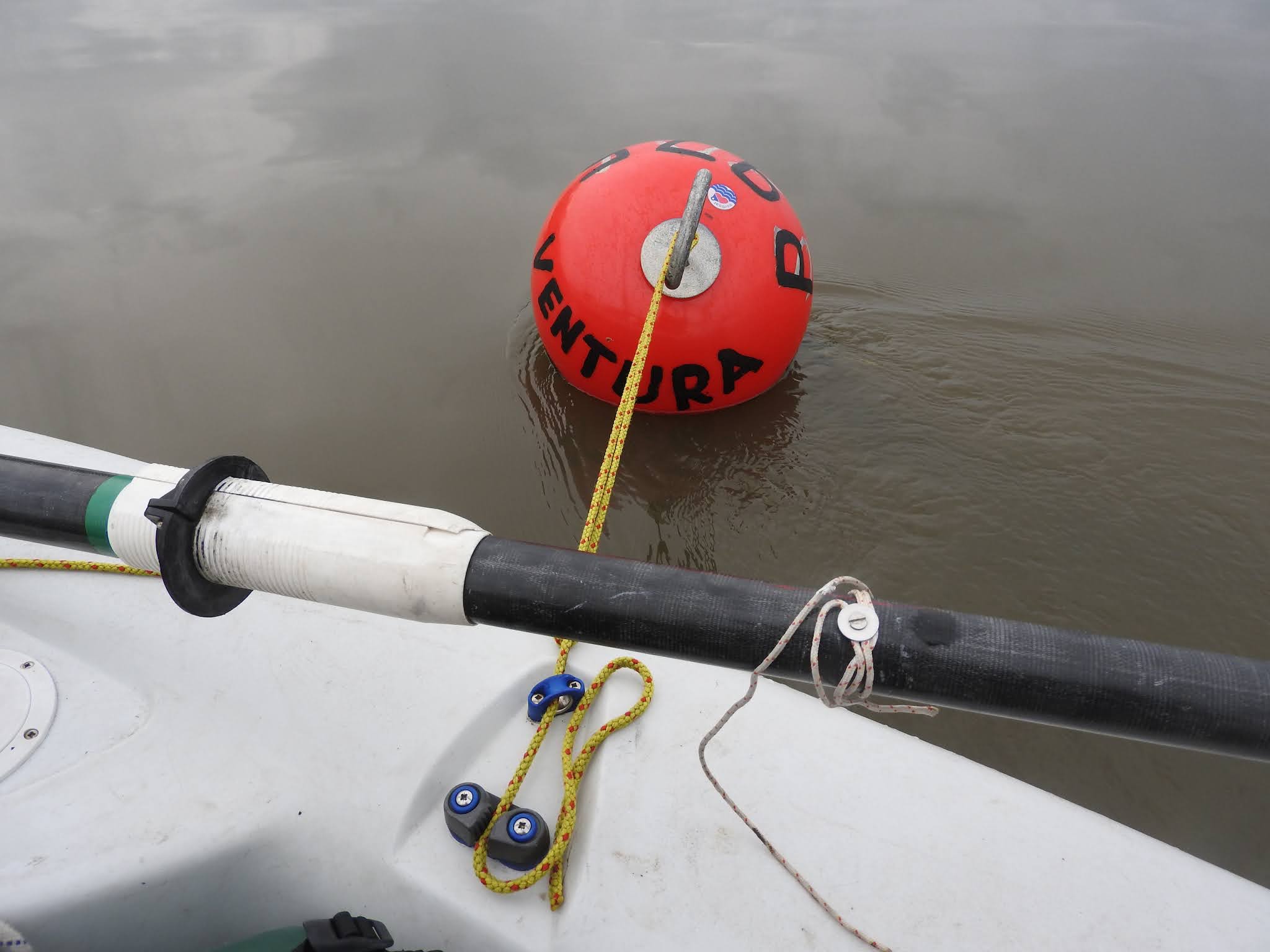
A convenient buoy was situationed outside the harbour.

I then felt my way in to avoid grounding. Once inside, the water turned a brown colour due to the deposits from the River Axe. I was able to moor up in the calm waters of the local sailing club.


Saturday, 7 August 2021

On Chesil Beach

 For a while I have been wanting to visit Chesil Beach again. 

Chesil Beach is the line extending in the middle of the picture, separated from the mainland by water.

This 18 mile pebble beach in Dorset presents a challenge for any form of boat, being a lee shore in the prevailing south westerly winds.  In days gone by, hapless ships would be embayed off this shore, driven onto the grinding pebbles of the beach, and destroyed by the crashing waves and undertoe. 

So I had to go when there was calm weather, a smooth sea and little wind, preferably blowing offshore. 

I started ten miles west along the beach, at Abbotsbury. To access the beach, PicoMicroYacht had to be pushed between a gap in some rocks.


It was then dragged up the back of the beach ready to be slid down to the sea the next morning. The beach is about 11 metres high. 

As the sun was rising I started to row eastwards.

On the horizon was the St Catherine's Chapel, built by monks in the 14th Century as part of the Abbotsbury Abbey.  I was curious about the name and found on the internet that St Catherine was a persecuted Christian from Alexandria, canonised as a patron saint of philosphers, amongst others. The Abbotsbury monks had venerated her.  I discovered she was murdered, her punishment for her faith being tied to a wheel and set alight, the origin of the firework name 'Catherine Wheel.'

I rowed onwards, with mile upon mile of shingle on my right. I have read that some find this monotonous, but I was marvelling at the changing patterns of the shingle bank. 


Although isolated and mainly deserted, along the way are boats for sea fishing, reached by ferrying across the stretch of brackish water that separates the bank from the mainland. 

My destination was the base of the Isle of Portland the stone island that splits East and West Dorset into different sailing areas.

After about three and a half hours of rhythmic rowing in calm waters I was at Chesil Cove, nestling under the island.

Beaching PicoMicroYacht in the very calm sea was still not straightforward due to the steepness of the bank. Eventually I was able to drag PicoMicroYacht above the tideline and erect a small tent for shelter.

That night I sensed moonlight from inside the tent and looked out to see the moon rising over Portland Island.

The next morning the wind had got up, blowing offshore. I put the PicoMicroYacht masts up and fitted a new bowsprit I made recently.

PicoMicroYacht was slid out into the sea. As I readied the boat for sailing back to Abbotsbury, I was quickly blown out to sea and the waves began to make their presence.

The extent of the wind meant I did not need to row, so I got PicoMicroYacht under control and used the sails to slowly angle back to the shore where it would be calmer. 

I skirted along the beach. Again, it was relatively deserted, but I did spot a solitory walker. I know from accounts of walking the beach it is heavy going along the shingle, and I was having a much easier time of it.


The Isle of Portland was now several miles away.


The odd fisherman was to be avoided, their lines extending well out to sea.

Onwards I went, the beach stretching into the distance.

Eventually, the presence of beach people indicated I was now back at Abbotbury.


On arriving, a family came and helped PicoMicroYacht up the beach, instructed by the father. Feeling fatigued ,I thanked them profusely. 

When they finished, the father touched elbows and spontaneously said: 'God Bless you Brother.' It seems strange to write this, but being blessed by a stranger was a positive for me.

All I had to do now was slide PicoMicoYacht back down the other side of the beach and I had finished my adventure.


Thursday, 3 June 2021

The Regent's Canal and the Islington Tunnel

 2nd May 2021

I was on the final journey of my voyage through the London Waterways, from Paddington to the Limehouse Basin, along the Regent's Canal. I did this journey with the CASPA runners on the towpath.


Map showing the Regent's Canal - Print from the British Museum

This canal was built in the early 19th Century by the architect John Nash using his connections with the Prince Regent to support the project, hence the name.


The Prince Regent, later George IV

The CASPA runners took some photographs. I had on board my Honda 2.3 outboard, needed to get through the Islington Tunnel. A special frame was made for the outboard, ready just in time for this voyage.


The Regent's Canal winds around Regent's Park, including the Zoo. A disused aviary was on my left, and I saw glimpses of African Hunting dogs in enclosures to my right.


As we approached Camden someone was being creative with spray paints on a wall.


There followed three locks around Camden, the first being the Hampstead Road Lock. 


A controversy ensued as a bystander told the lock keeper that PicoMicroYacht should not be going through the locks. The lock keeper disagreed. The CASPA runners and a cyclist chatted to him and explained what we were doing.


Around these parts an architect had come up with a creative adaption of the Gasometer


Having passed through the locks I spied the Word on the Water Bookshop, part of the practical quirkiness of this part of London. 


The next major landmark was the Islington Tunnel, stretching 878 metres under Pentonville. The CASPA runners were above me, visiting a street cafe.


 Salutary to think that this canal was tunnelled by hand.


A notice by the entrance to the Canal reminded me of the rules.


I started the outboard and donned my boat lights and set off.  I found my front light was not enough to illuminate the walls and struggled to use the small dot of light in the distance as a reference point.


Trying to photograph the light at the end of the tunnel


After the tunnel, I motored on a few yards and then lifted the engine, returning to rowing for the remaining four miles to the Limehouse basin.


I had completed my voyage through the Waterways of London. 


Postscript: PicoMicroYacht stayed the night in the Limehouse Basin and the next day went through the lock into the River Thames to a slipway just downstream on the Isle of Dogs. The weather was just about to deteriorate, with gale force winds, so I had just made it in time.

Wednesday, 2 June 2021

To the heart of London by Canal

1st May 2021

It was time to go into the heart of London via the Paddington Branch of the Grand Union Canal, a 15 mile trip.


Entering through an arched bridge, tranquil waters awaited.


The canal was brimming with wildlife, including the coots with their young, and majestic herons.


Bee keepers have hives facing the canal.


Contrasting with the tranquility of the canal at one point I went over the North Circular Road on a viaduct, filming it briefly.


I realised that an Ultra running event was scheduled along the same route. I was being overtaken by the runners, on their 43 mile course from the Chilterns to Paddington. 


Refreshment points and first aiders were frequent.


Nearing the Paddington, local eccentrity created interest.


At one point, the M4 dominated the canal.


 Little Venice appeared and my destination was just round the corner. 


I was able to park PicoMicroYacht just round the corner from Paddington Station.